

Estimated reading time: 6 minutes
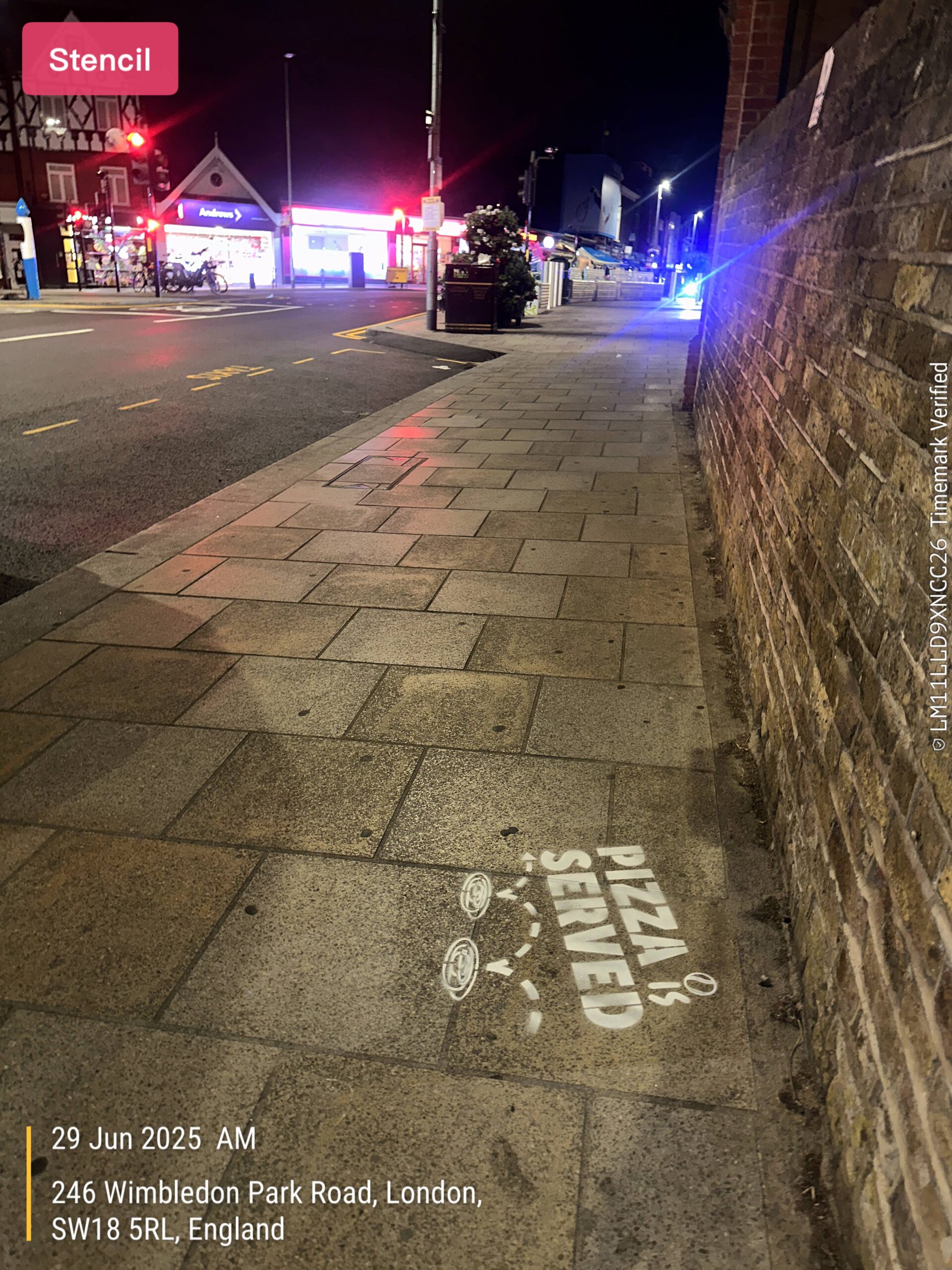
Thank you for reading this post, don't forget to subscribe!In an age where digital navigation dominates, the art of physical wayfinding has taken on a new, creative dimension. Artists, activists, and urban planners are increasingly turning to reverse graffiti and chalk stencils to mark paths, communicate messages, and guide people through city streets in environmentally friendly and visually striking ways. This article explores how these techniques are used for waypointing—the act of marking intermediate destinations along a path—and why they’re gaining traction in public spaces.
What is Waypointing?
Waypointing refers to the marking or mapping of specific points along a route to guide individuals from one location to another. Traditionally, waypoints are digital markers on a GPS map. However, in physical spaces, waypoints can be signs, markings, or symbols that indicate direction, offer encouragement, or point toward a final destination. They are particularly useful in:
- Urban exploration routes
- Protest or awareness marches
- Public art trails
- Treasure hunts or alternate reality games
- Pop-up events and temporary installations
In these contexts, physical waypointing becomes both functional and expressive.
Reverse Graffiti: Cleaning as Art
Reverse graffiti, also known as “clean tagging” or “grime writing,” is a technique where messages or images are created by cleaning dirt and grime from a surface, rather than adding material like paint or ink. Using stencils and pressure washers, artists can selectively clean sections of a dirty wall or pavement to create striking, often temporary artwork.
How It Works:
- Stencil Creation: A design or message is cut out of a durable material like plastic or thick cardboard.
- Surface Selection: Reverse graffiti adverts work best on grimy, pollution-darkened surfaces like tunnels, sidewalks, or brick walls.
- Cleaning: With a pressure washer or sponge, the artist cleans the exposed areas of the surface through the stencil.
- Reveal: Once the stencil is removed, the cleaned area contrasts sharply with the surrounding dirt, revealing the image or text.
Reverse graffiti is ideal for sustainable waypointing. Since it removes grime rather than applying chemicals, it’s seen as eco-friendly and non-destructive, often escaping the legal scrutiny associated with traditional graffiti.
Applications in Waypointing:
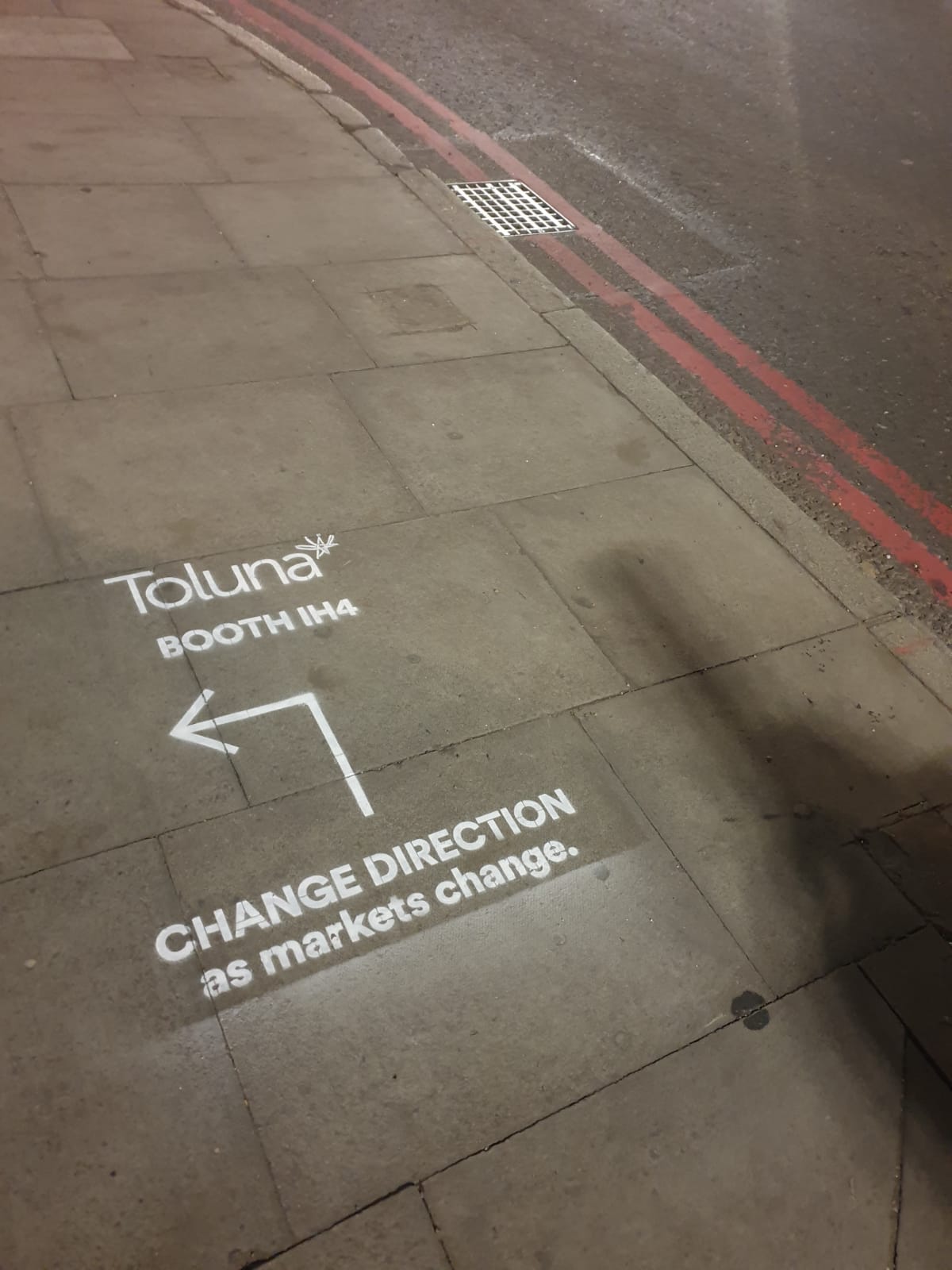
- Directional arrows or feet printed on sidewalks
- Inspirational quotes at checkpoints
- Location markers for events or installations
- QR codes or short links for digital interaction
Because it’s made from cleaning, the result fades over time as the surface gets dirty again, making it perfect for temporary wayfinding without leaving permanent marks.
Chalk Stencils: Ephemeral, Colorful, and Playful
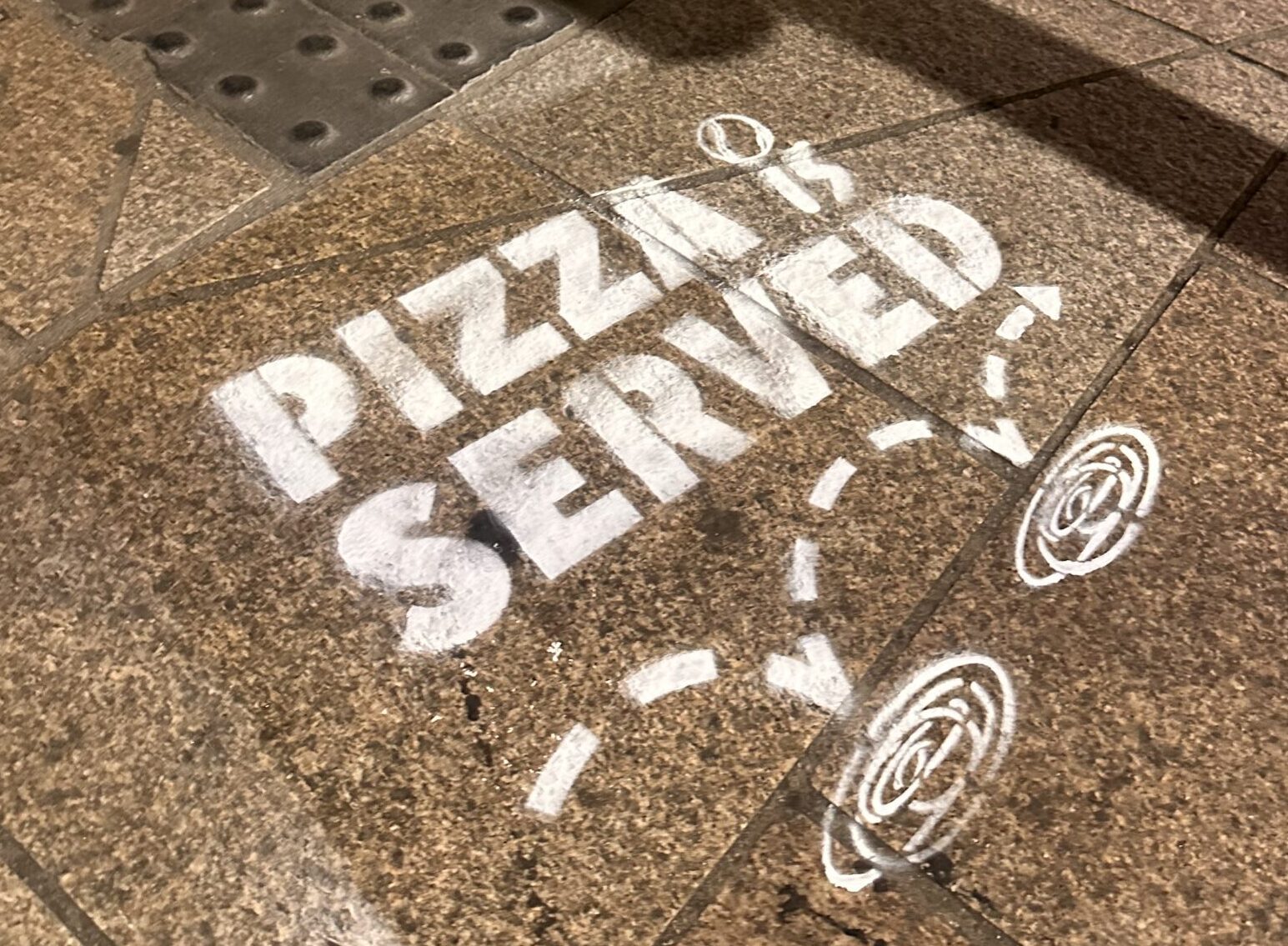
Chalk stencils use powdered or liquid chalk to apply temporary messages or graphics onto sidewalks and other outdoor surfaces. The technique is quick, inexpensive, and ideal for community-based or short-term projects.
How Chalk Stencils Work:
- Designing the Stencil: Similar to reverse graffiti, the stencil design is created and cut from a durable material.
- Chalk Application: Using spray chalk, powdered chalk with brushes, or even chalk markers, the design is filled in.
- Setting (Optional): Though not always necessary, a gentle fixative like hairspray or water can be used to make the chalk last a little longer.
- Natural Erasure: Rain, foot traffic, or time naturally wears the stencil away, making it ideal for pop-up navigation.
Chalk stencils provide the benefit of vibrant color and a broader range of surfaces than reverse graffiti. They are popular in activist work, marketing campaigns, and art walks, where the goal is to attract attention and guide individuals subtly and creatively.
Applications in Waypointing:
- Route markers for charity walks or runs
- Event trails with arrows and color-coded paths
- Pop-up museum or gallery directions
- Community storytelling trails or historical markers
Benefits of These Techniques
Both reverse graffiti and chalk stencils offer a number of advantages for physical waypointing in urban environments:
1. Environmental Friendliness
- Reverse graffiti uses water to clean rather than chemicals or aerosols.
- Chalk stencils use non-toxic, biodegradable chalk, minimizing environmental impact.
2. Legality and Permissibility
- Many cities tolerate or even encourage reverse graffiti and chalk stencils because they are non-permanent and don’t damage property.
- They can be classified as “art” or “temporary signage” rather than vandalism.
3. Low Cost and High Impact
- Materials are affordable: stencils can be reused, chalk is cheap, and pressure washers are widely available.
- Visually striking results with minimal investment.
4. Community Engagement
- These tools are easy to learn and perfect for community-led events, participatory art, and educational initiatives.
- They invite people to interact with their environment in playful, meaningful ways.
5. Flexibility
- Waypoints can be designed to last a few days or a few weeks, depending on the desired impact.
- Designs can be playful, formal, artistic, or informative—suited to nearly any context.
Creative Examples of Waypointing
Urban Art Trails
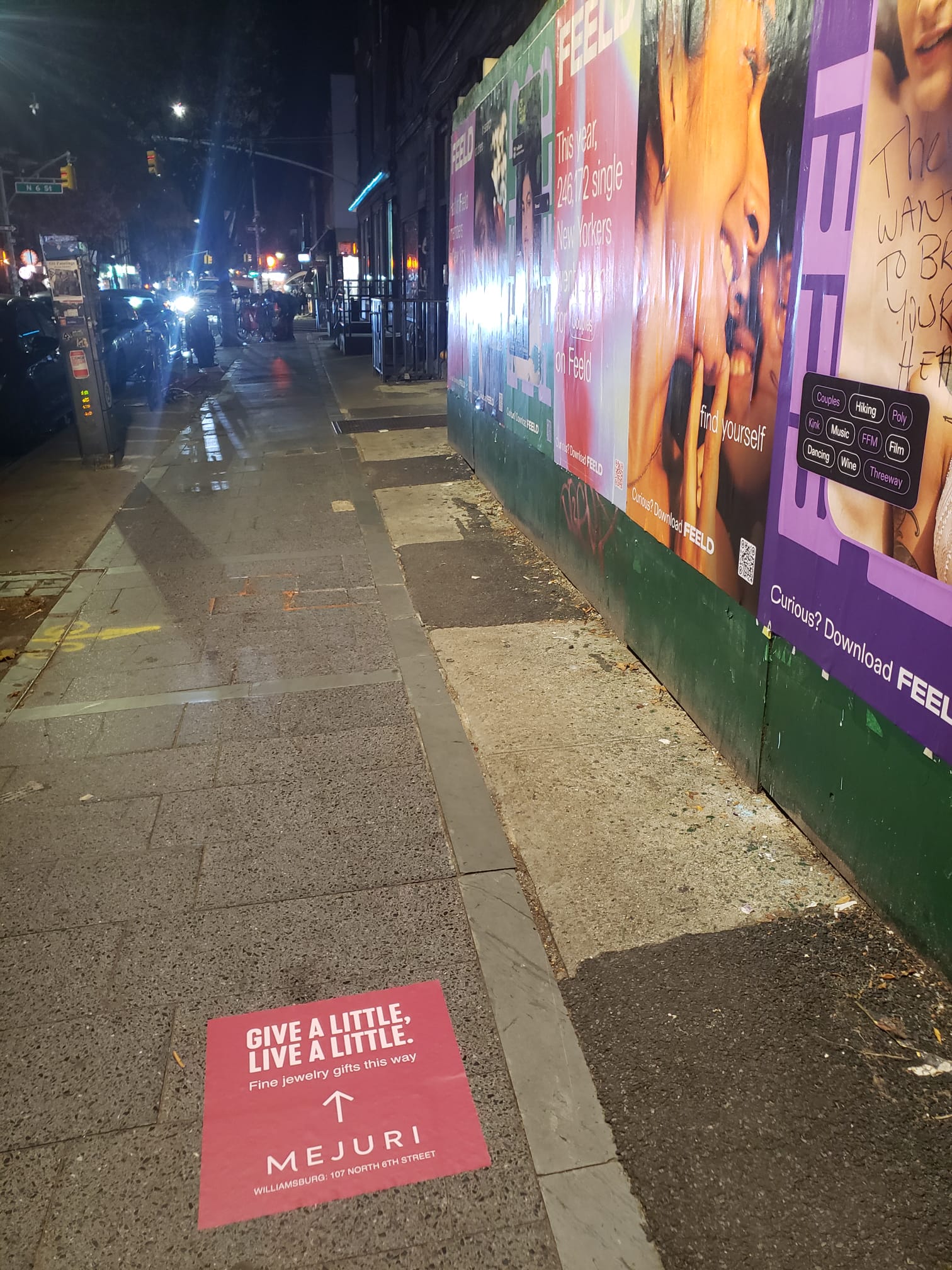
Cities like London and San Francisco have used chalk and reverse graffiti to create self-guided walking tours featuring art, history, or local highlights. Each waypoint includes a symbol, a short description, and a direction to the next stop.
Environmental Campaigns
Activists have used reverse graffiti to mark routes leading to polluted areas, guiding citizens through visible examples of environmental neglect or triumph. Similarly, chalk stencils have been used to lead pedestrians to clean water access points or recycling centers.
Festivals, night markets, and flash mobs often use chalk stencils to point visitors toward stages, restrooms, or attractions. Creative typography and playful images make the path as much fun as the destination.
Protest Wayfinding
Activists have marked protest routes with chalk stencils to indicate assembly points, highlight causes, or direct foot traffic non-invasively. This provides clarity during large-scale gatherings while reinforcing the group’s message.
Final Thoughts
In an increasingly digital world, the art of physical waypointing using reverse graffiti and chalk stencils reintroduces a human, tactile element to navigation and public messaging. These low-tech methods offer high-impact results—communicating directions, inspiring creativity, and engaging communities in a way that’s temporary, safe, and environmentally sound.
Whether you’re guiding people to a gallery opening, organizing a public awareness campaign, or simply brightening up a dull city corner, these techniques provide a unique toolkit for transforming urban spaces. All you need is a stencil, some chalk or water, and a creative vision for where the path should lead.
Key Takeaways
- Waypointing involves marking specific points along a route to guide individuals, using techniques like reverse graffiti and chalk stencils.
- Reverse graffiti cleans surfaces to create art, while chalk stencils apply temporary messages, both used for sustainable waypointing.
- These techniques offer eco-friendly navigation, encouraging community engagement without permanent marks or legal issues.
- Both methods are affordable and have visually striking results, making them ideal for events, protests, and urban exploration.
- Cities leverage waypointing to create art trails, advocate environmental awareness, and enhance public engagement in creative ways.